Reading Time: 12 minutes
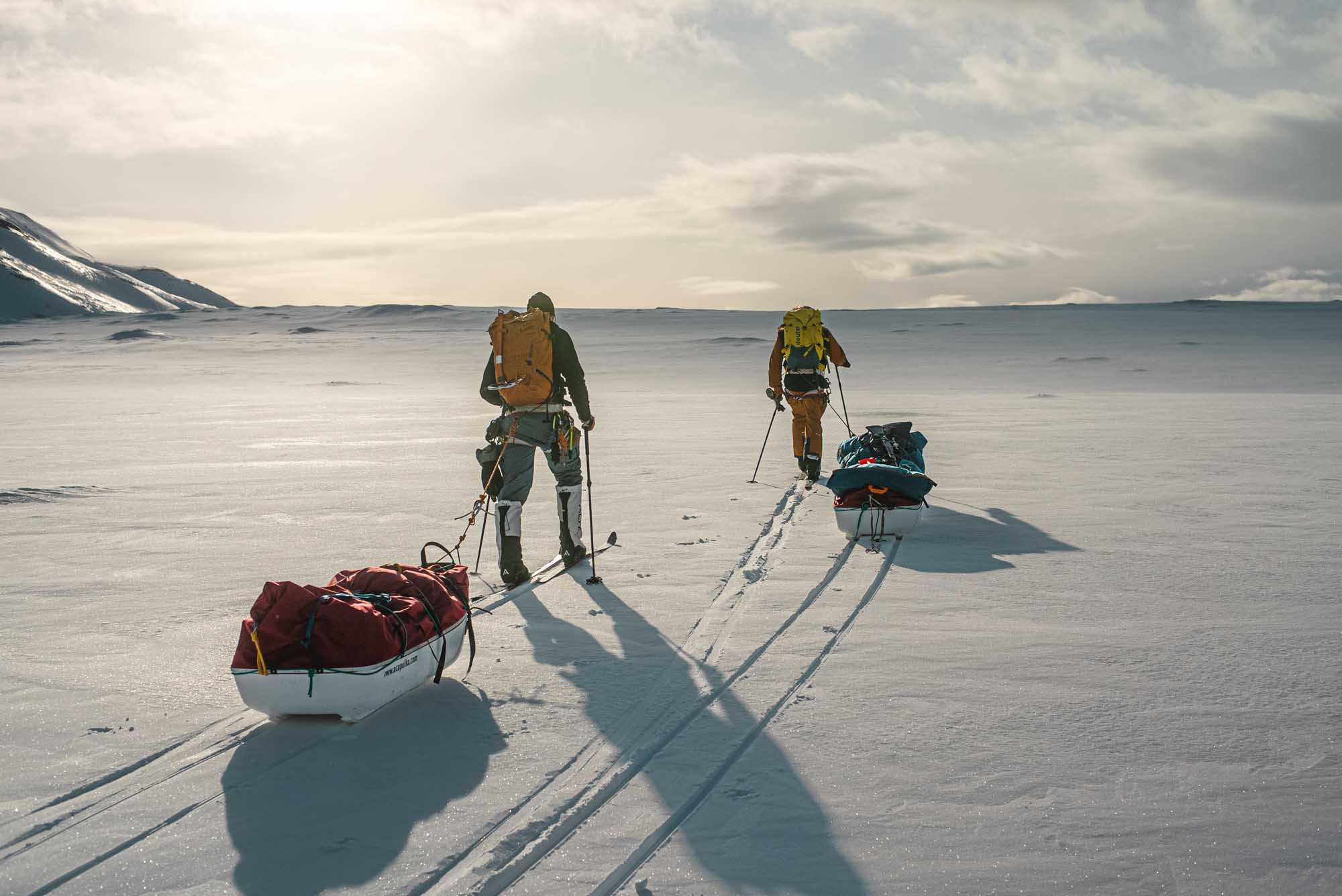
In 2023, I embarked on an expedition to the Arctic: 40 days in the field, 700 kilometres of skiing with a 60-kilogram pulka behind me, and sleeping (almost) every night in tents.
On top of that, I had the task of documenting this whole trip and creating a 90-minute film afterwards.
If you—like me before this trip—have never been to similar environments before, let alone bring all your camera gear to those places, you’ll probably have many questions regarding filmmaking in these places. If you’ve been to such a place before, you might even have more questions.
In this article, I want to share to the best of my ability the experiences I made while filming in the extreme cold for 1,5 months, and provide some really helpful tips (at least they helped me) and best practices if you should ever find yourself in the same situation.
So at the beginning of 2023, I was preparing for a trip I didn’t really know how to prepare for. I knew that I could do that expedition physically, as my fitness level is overall quite good. What kept me awake at night were questions like:
- How do I keep my camera from freezing?
- How fast will the batteries drain when the temperature drops?
- Where to get my energy from? No sockets in the Arctic wilderness, that’s for sure.
- Am I even able to do this? Am I able to participate in this expedition AND film everything for a feature-length movie?
While the last question was more of a mental challenge (I wrote a full article about my mental challenges during that trip, find it here: https://powderguide.com/en/magazine/abenteuer-reisen/expedition-spitsbergen-challenges-of-a-border-crossing-part-i), the other questions were of a technical nature.
Living just next to Mont Blanc in the Alps allowed me to spend the months before our expedition experimenting in a similarly cold environment, albeit not quite as cold. For example, I left my camera outside overnight and tried to film with it the next morning: does it work as usual? How much battery was lost during the cold night? Do certain mechanical parts freeze?
Whenever I did one of those tests, the results were similar: everything worked as usual. I did not find a single flaw, a single error or a single thing that didn’t work during these tests. Fast forward to the expedition itself, there were a couple of things that I hadn’t accounted for, and that actually failed in the field. There were also a couple of things that unexpectedly worked so well, I couldn’t really believe it.
So, before I turn to the technical and practical matters, here’s a big takeaway—at least for me: the testing on my porch was a fun little exercise with little to no useful result. You should definitely test your equipment, but it must take place in an environment that is as close as possible to the actual environment. Putting my camera outside on a cold night just wasn’t enough.
I did test my self-made battery solution thoroughly, though, and that has proven to be indispensable. I’ll won’t get into that matter in this article, but I might write about my custom powerbank and energy supply of this trip in a later blog post.
What happens to equipment in a really cold environment?
With really cold temperatures, I am talking about temperatures between 0° and -25° Celsius. Sure, you can go much colder than that, but that range was what we encountered most of the time (-10° C actually is the perfect sweet spot in terms of ski-expedition temperature, believe it or not).
After a couple of days in the cold field, here’s what happened to my equipment: absolutely nothing. Rien.
I was surprised, for sure, but pleasantly surprised. I found that just being in the cold does nothing really to electronics themselves. What does affect electronics—how I had to learn the hard way—is a change of temperature and a change of weather.
Here are some actionable tips and my experiences from the field (expand the sections that interest you):
Changing weather scenarios
Warm to cold
The best scenario: nothing really happens. If you have metal on your camera, it just gets a little more hurtful to touch it, but I guess you’ll be wearing gloves anyway. If your camera is dry, and it gets cold (in the best case, over a prolonged period of time, like a couple of hours) you’re generally fine and don’t need to do or watch out for anything.
Cold to warm
If this happens over a prolonged period of time (half a day, for example), you’ll also be fine. Things get harder when you, for example, go into a tent. The change in temperature from outside a tent to inside a tent can be 20° C or even more—once we managed to heat up our tents to about +15° C while we had -15° C outside.
The second you enter that warm tent (or house/hut for that matter), your camera and lens instantly start to condensate and droplets of water will build. The lens fogs up, and you won’t be able to film anything.
Adapting to this new temperature takes about 10-15 minutes, and the camera will get wet in the process (although it usually dries after that amount of time).
Whenever I wanted to film inside our tents, I waited those 15 minutes, or put the camera inside 15 minutes before I actually wanted to film.
There’s another trick I’ve heard of, although I have never tried it (if you have and it works, let me know in the comments): When you’re in the cold, put the camera in a sealable plastic bag, close it up and then take it into the warmth. You still need to wait a certain amount of time for the camera to warm up, but the condensation should now take place on the outside of the plastic bag, and not on the camera itself, thus keeping it nice and dry.
Dry to wet
Snow that falls at -5° C or colder is usually something I would consider dry. If it’s cold enough and your camera gets snowed in, it really doesn’t hurt the camera as long as it’s weather sealed (I filmed with the Sony A7S3 and had no problems whatsoever with it being full of snow, even lying under the snow overnight). Snow at cold temperatures consists of a lot of air and very little water (30:1 ratios are no exception here), so it isn’t really wet.
The really bad things happen when it is wet, and it gets warmer than say -5° C. Snow at around 0° C has a different air/water ratio (around 5:1), meaning more water that is now falling onto your camera. Let it get even warmer, and you have rain. Everyone knows that rain and electronics are usually not the best of friends.
When it’s snowing and it’s warm, you’d better protect your camera from all the moisture. Chances are that it will keep working for a very long time (I certainly made that experience myself, wondering why a camera that wet could still film), but there will be a point where it will no longer turn on. You really don’t want to get to that point!
Warm&wet to cold
This is the worst of all, and I encountered this situation right at the beginning of our expedition. Here’s what happened to me:
It started with warm weather, I left my camera outside the tent overnight as usual, so it was snowed in a little and felt generally wet. No problem so far, it still worked without problems. Throughout the day, though it got cold really fast, the temperature dropped by about 10 to 15 degrees well into the negatives. By the end of the day and after a couple of hours not using my camera, I noticed that it would still turn on, but the moisture inside the camera (which was not much) froze and kept the shutter curtain closed. All I saw was black. I could neither take any pictures nor videos; the sensor was physically blocked by the curtain and ice.
Luckily, I did not really miss any important situations I needed to film, but I had to get creative in order to get my camera to work again: after the water for the evening had boiled, I kept the stove running, detached the lens from the body and held the camera for about 20-30 minutes over that stove. I had no idea if it would work, but in that moment, it was the only solution. And…
it did work! Click, and the curtain swung open as soon as the water started to disappear because of the heat.
My advice: when your electronics are wet/moist/snowed in, and you know it’s going to get colder, be very careful! All that water and moisture will freeze, no matter if it’s outside or inside the camera.
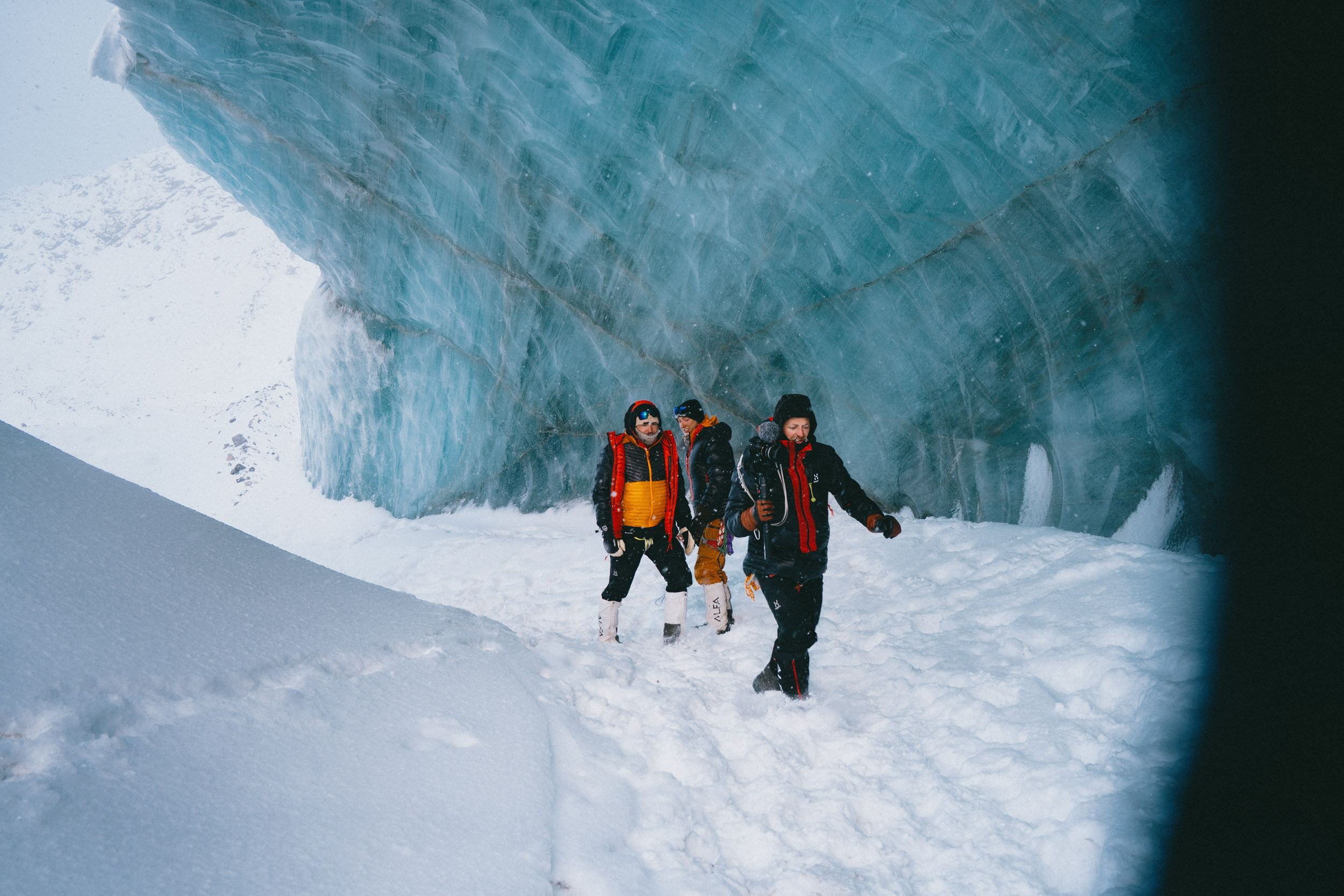
ABOVE: me filming Sigurd and Peder in a massive ice cave we found along the way.
Battery management in the cold
Despite everyone telling me that this is the most crucial part, and that no battery will work properly or lose a lot of its capacity when it’s cold, I have had the opposite experience: the batteries of my Sony A7S3 never lost more than 1% over any period of time. Sometimes I left the camera outside the tent overnight with, say, 65% battery left. When I turned the camera back on the next morning: 64%, and I could start filming right away.
That said, batteries normally do have a big problem in the cold. I guess it’s just the Sony batteries that were exceptionally tough.
What to look out for
I assume you are using Li-Ion batteries. Those things are the normal type of batteries, the ones you find in almost every smartphone, power banks, drone batteries, etc.
You might hear that they lose power when they are cold. That’s not really the case. They temporarily seem to lose power when they are cold, but as soon as you warm them up again, they are back at 100% (or whatever capacity they were at before). An exception might be very old batteries near the end of their life.
DJI drone batteries are exceptionally bad in cold weather, and a lot of the time, my drone just didn’t want to start, although I put a fully charged (yet cold) battery into the drone. My solution for this was to fill hot water into one of my non-insulated water bottles (Nalgene), and put that bottle together with the drone batteries in my insulating camp shoes. During the day, I didn’t wear them anyway, and whenever I wanted to fly, I could get those warm and toasty batteries. Worked perfectly.
Another big problem with those types of batteries is charging them while they’re cold—it just doesn’t work.
When you attempt to charge a battery with a core temperature below 4-5° C, you will pretty much destroy it. Most modern devices have some sort of mechanism to prevent this, so they’ll tell you the device is charging, but there is no power actually going into the cells. As time progresses, and maybe you have these batteries in your sleeping bag while charging, they will slowly start to accept energy as they get warmer.
In most cases, this is just a matter of time, and you don’t really need to do anything. Just keep in mind that batteries need to be warm to be charged, or you could have them on a power cord for a very long time without ever getting energy into them.
In my case, with my self-made power bank, I had to watch out and measure the temperature of the cells myself. Had I hooked them up to my solar panels while they were too cold, I would have destroyed them and thus destroyed the power supply for our expedition. That would have been a disaster.
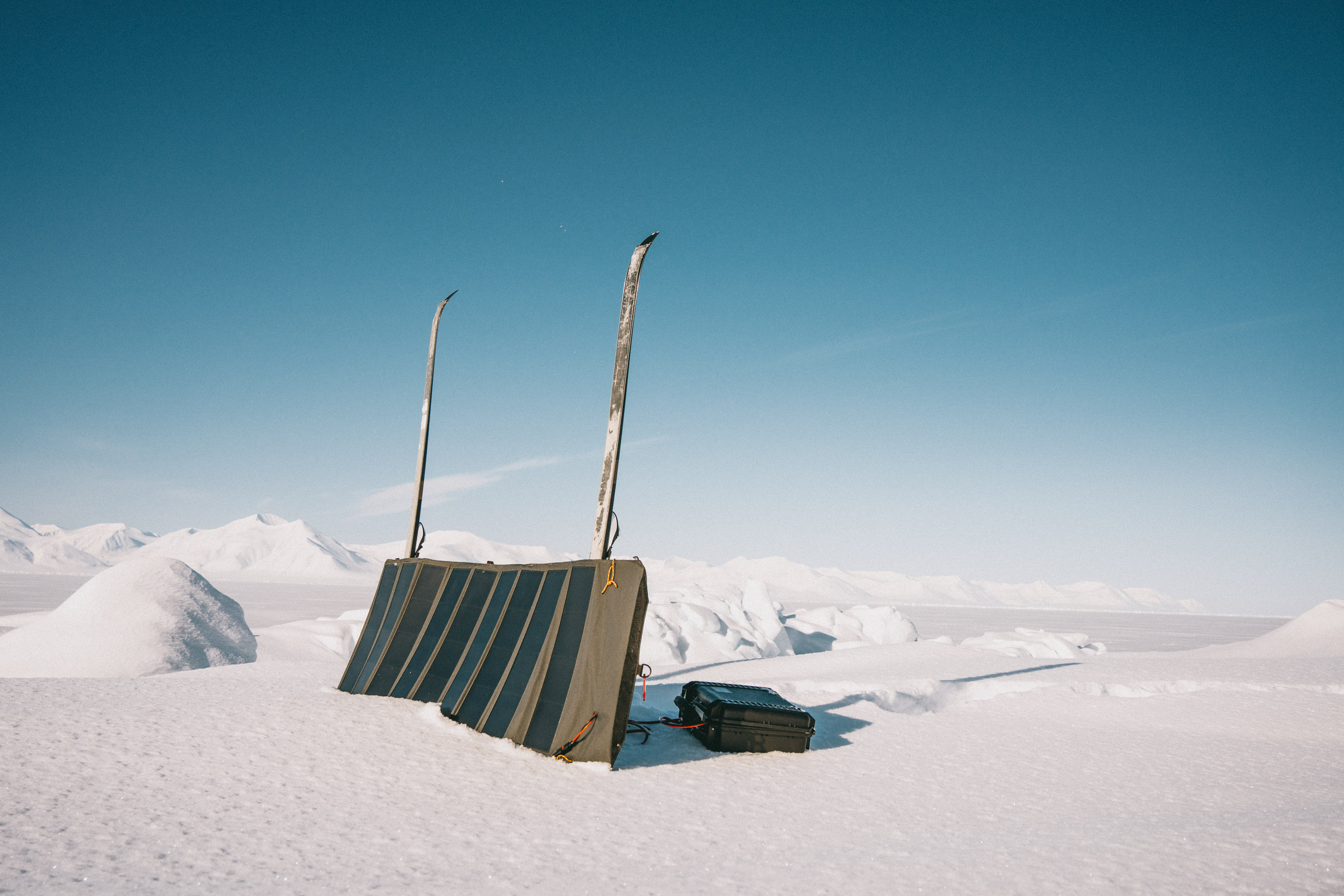
ABOVE: my self-made powerbank in action. I had two of those 130W panels on this trip.
Other quirks I noticed that you should keep in mind
- One of the weirdest problems of using electronics in the cold had to do with my drone. It got a little wet around the gimbal, and then the outside temperature dropped to -15° C. As a result, the gimbal of that drone froze, which resulted in super shaky and unstabilized footage. The only workaround (and that also was just temporary) was to breathe on the gimbal to unfreeze it and then use the next 3-4 minutes to get my shots, before it froze again. Similar problem to what I described before with the frozen shutter curtain of my camera.
- I also used vintage lenses that weren’t really weather-sealed. Sometimes water would get inside the lens and fog it up, and the only way to get the water out was to hold the lens over the running stove for a couple of minutes. My lenses were mainly made of metal, but this works with all the new plastic lenses, too. Just be very careful not melt the plastic (happens faster than you think!).
- Screens, especially LCDs with those liquid crystals inside, can freeze. The image will look pretty strange, as if it is lagging behind, and you’ll notice some weird trails when something is moving. This is only temporary, though, and it won’t affect the recorded image, so don’t worry too much about it when this happens. Keep the screen close to the body and let it warm up again if it troubles you with composition, framing, or judging focus.
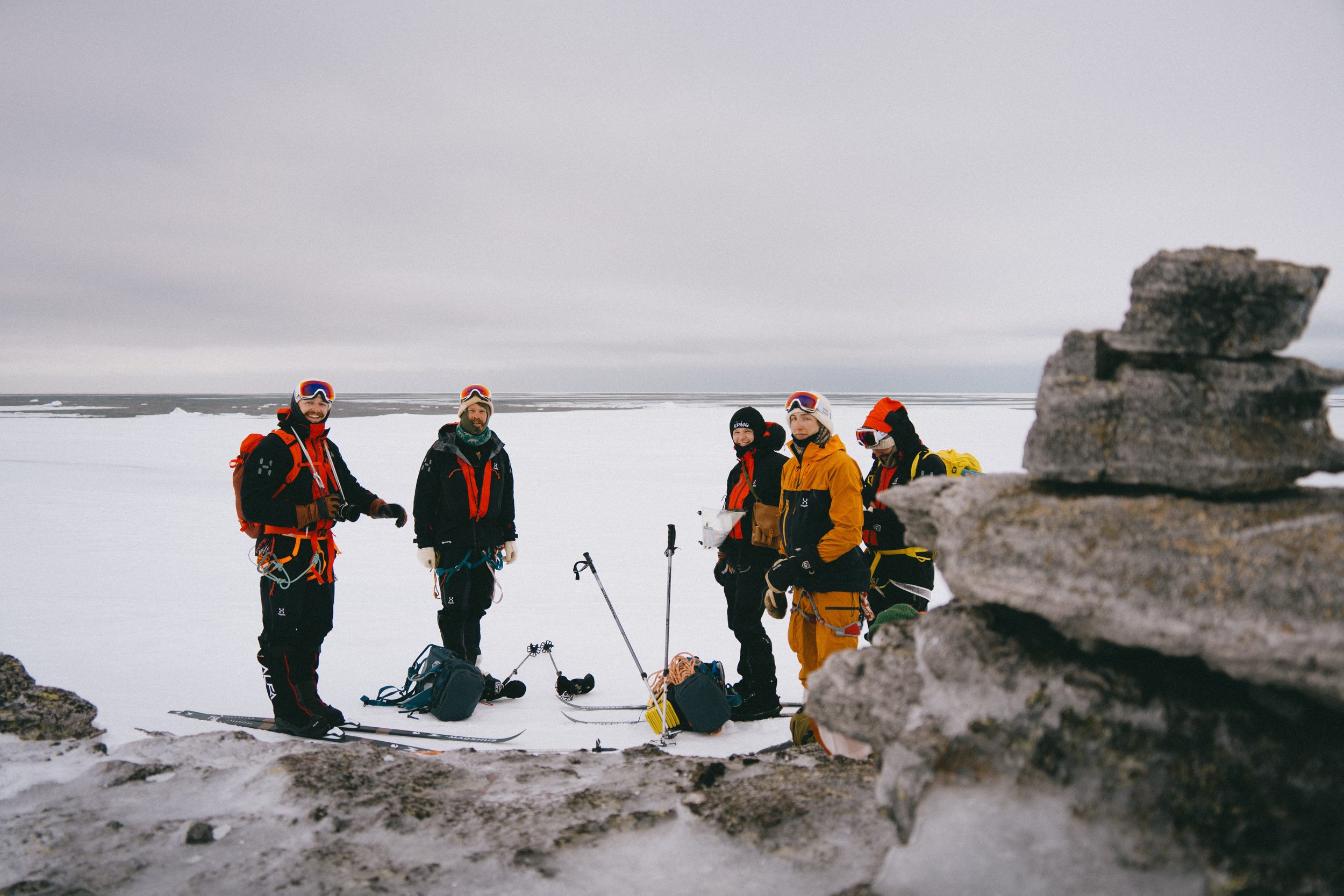
ABOVE: our team on an overcast day at Sørneset, Spitsbergen’s southernmost point.
Tips that helped me (and might work for you, too)
Some are obvious, some didn’t come to my mind until the very last days of our expedition. Consider those tips as starting points and work out a process of filmmaking that works for yourself.
Keep batteries close to your body
Although my Sony batteries worked well even when cold, it’s generally a good idea to keep all the batteries you are planning to use that day warm. Do that by keeping them in a pocket close to your body. A small fanny pack underneath your mid-layer or down jacket might work. Some baselayers have small pockets, which is generally a good place, too.
If your batteries get bulkier (like drone batteries or V-mounts), throw them in a (in the best case, insulated) bag together with a Nalgene bottle filled with hot water. You could also use hand-warmers, but I find using them produces too much rubbish if you do that on a regular basis.
Practice doing everything with gloves
This might seem strange at first, but if you can operate every little button and all the accessories of your camera with gloves on, you have a big advantage. This doesn’t mean you can’t take off your gloves in sub-zero temperatures for a couple of seconds/minutes, but if you do that all the time, you need to press a button or change the lens, you’ll get freezing hands really fast.
Don't be afraid of extreme measures
Filming in sub-zero temperatures can be considered as working in an extreme environment. For that reason, if anything fails or just doesn’t work properly, think about creative and sometimes extreme measures to keep your production running. Remember that I baked my camera when it froze internally. I probably wouldn’t do that at home, but in the Arctic, it was the only way.
Plan out certain tasks in great detail
This is one example of what I want to say here: Every evening, I needed to back up all the files I shot that day. Because laptops and hard drives are exposed to the cold all day, they are probably ice cold when you get them out of your bag in the evening.
What I did here was fill up some of my Nalgene bottles with boiling water and throw that together with the laptop and hard drives in my sleeping bag. After some 20 minutes or so, those devices will warm up, ready to be used without the fear that they shut down mid-backup.
Knowing this, I prepared all this 20-30 minutes prior to the time I wanted to back up my files, and it worked perfectly.
Make your well-being a priority
If you have cold feet, you probably won’t focus 100% on getting the perfect shots. A part of your attention will always go towards warming up those feet.
On the contrary, if you’re warm, well-fed, and perhaps have a hot tea in the thermos next to you, chances are what you are filming is going to be really good. You can focus all of your attention on filming.
This mostly comes down to the right equipment: warm boots, multiple warm layers of clothing, a good down jacket, warm gloves, etc. Make sure you feel good, as it directly affects the quality of your work.
Finally, enjoy the process
What’s the point of exposing yourself to a situation like this and not enjoying what you’re doing? If you really don’t like the cold, maybe a place like the Arctic is not the right place for you.
I, on the other hand, really enjoy being in the cold, being exposed to the cold, so doing this expedition and embarking on a journey with so many unknowns was a completely logical step for me. Although I had many difficulties, many events that I did not anticipate, and a lot of moments where I needed to step (sometimes even jump) out of my comfort zone, this experience is amongst the best I have ever had.
I would love to hear about your experiences in the cold. Are there things that I missed? Are there problems that you encountered, and have you found workarounds for them? Let me know in the comments below. Until then, have a great time shooting!
About the author

You liked this read?
Subscribe to my irregular Newsletter for exclusive posts and straight-to-inbox delivery 🫰